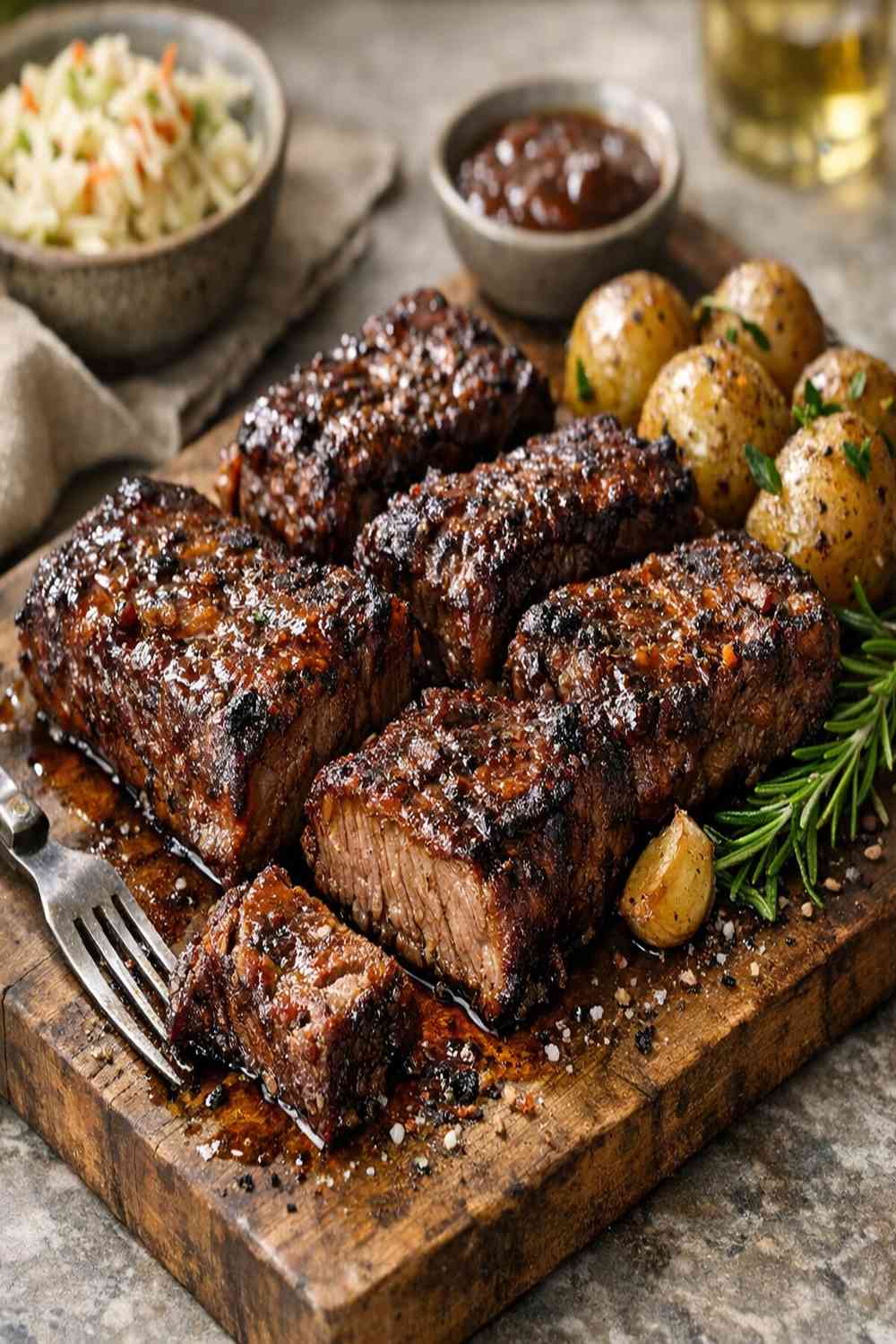

Ingredients
Method
Step 1: Prepare Your Ribs and Make the Dry Rub
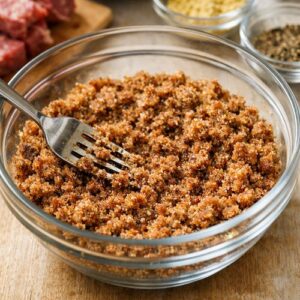
- Start by preheating your oven to 325°F. Pat your beef ribs completely dry with paper towels—this is critical for developing a proper crust. Moisture is the enemy of browning, so don't skip this step. While the oven heats, combine all your dry rub ingredients in a small bowl: brown sugar, paprika, garlic powder, onion powder, cumin, mustard powder, salt, and pepper. Mix thoroughly with a fork to break up any clumps in the brown sugar. The mixture should look like damp sand—evenly combined and fragrant. If you're making this ahead, you can prepare the rub up to 3 days in advance and store it in an airtight container.
Step 2: Season the Ribs Generously
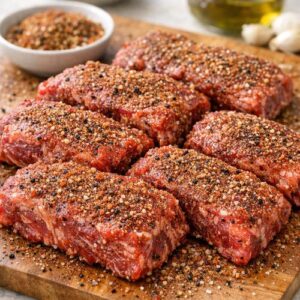
- Place your dried ribs on a large cutting board or directly in your baking dish. Divide the dry rub roughly in half. Apply the first half evenly to the top side of all six ribs, pressing gently so it adheres. Then flip each rib and apply the remaining rub to the underside. Don't be shy—this is your foundation of flavor. Every surface should be coated. At this point, if you're planning ahead, you can cover the ribs and refrigerate them for up to 24 hours. The flavors will actually deepen as they sit. Just bring them to room temperature for 30 minutes before cooking.
Step 3: Make Your Braising Sauce
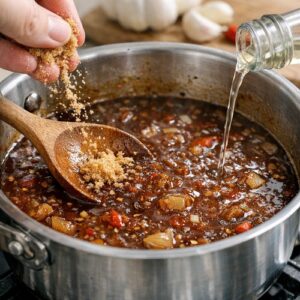
- In a medium saucepan over medium heat, combine your minced fresh garlic with the apple cider vinegar. Let it warm for just a minute—you want the garlic to release its flavor without cooking into harshness. Add the ketchup, brown sugar, black pepper, onion powder, mustard powder, cayenne pepper, and Worcestershire sauce. Stir everything together and let it simmer gently for about 5 minutes. Taste it now—this is your chance to adjust. If it's too acidic, add a pinch more brown sugar. If it's too sweet, add a splash more vinegar. If you want more heat, add another ¼ teaspoon cayenne. Then add your 2 cups of water (or broth) and stir well. The sauce should be the consistency of tomato soup—pourable but with body.
Step 4: Braise Your Ribs
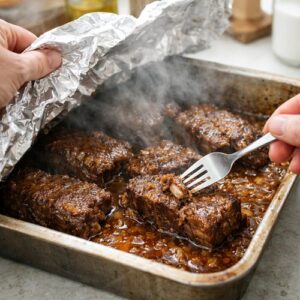
- If you haven't already, place your seasoned ribs in a large baking dish or Dutch oven, arranging them in a single layer if possible (they can overlap slightly if your vessel is snug). Pour the entire sauce around and over the ribs. Cover the dish tightly with foil or a lid—this seal is important for moisture. Place in your preheated 325°F oven. Set a timer for 1 hour and 45 minutes. At that point, carefully remove the foil (watch for steam!) and check the ribs. They should be quite tender when pierced with a fork. If they're not quite there, re-cover and continue cooking for another 15 to 30 minutes. Total cooking time is usually 2 to 2.5 hours, depending on the thickness of your ribs.
Step 5: Finish and Rest
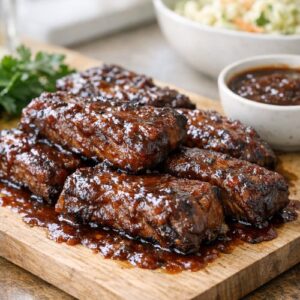
- When your ribs are fall-apart tender, carefully remove the baking dish from the oven. Let them rest uncovered for 5 to 10 minutes—this allows the meat to relax and the sauce to set slightly. If the sauce seems too thin, you can transfer the ribs to a serving platter, then place the sauce in a saucepan over medium-high heat and simmer it for 3 to 5 minutes to reduce and concentrate the flavors. Pour it back over the ribs.
Step 6: Plate and Garnish
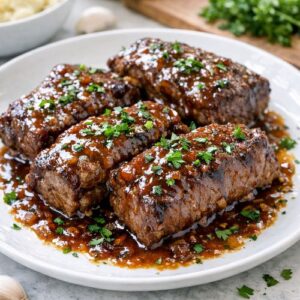
- Transfer ribs to your serving platter or individual plates. Spoon that precious sauce generously over the top. Finish with a scatter of fresh parsley or chives for color and a fresh note that cuts through the richness. The herbs aren't just pretty—they add a brightness that balances the deep flavors underneath.
Notes
- Not patting the ribs dry - Moisture prevents browning and keeps the rub from adhering properly. This is the single most important step for developing a flavorful crust.
- Opening the oven too frequently - Every time you peek, you release heat and extend cooking time. Trust the process. Set a timer and leave it alone.
- Overcooking past tender - There's a point where ribs go from "fall-apart tender" to "mushy." Cook until a fork easily pierces the meat with gentle resistance, not until it shreds apart. Usually this is 2 to 2.5 hours.
- Using cold sauce - Cold sauce added to hot ribs will cool the dish down. Always add sauce at or near room temperature, or warm it gently first.