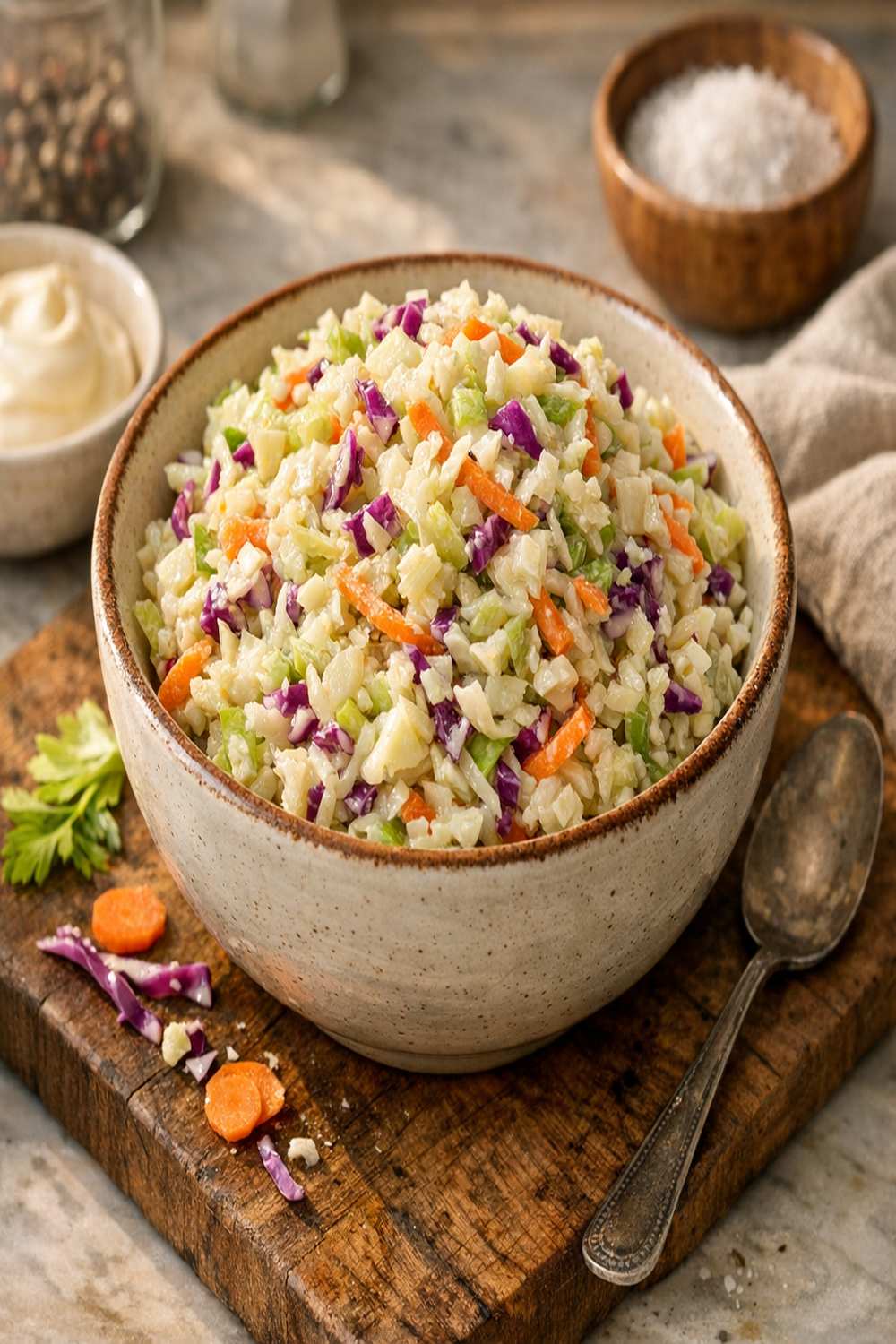

Ingredients
Method
Step 1: Prepare Your Vegetables With Precision
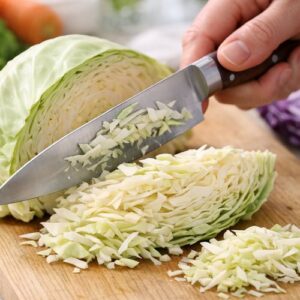
- Take your head of cabbage and cut it into quarters lengthwise. Using a sharp chef's knife, slice each quarter thinly first—about ¼-inch thick pieces. Then, carefully stack these thin slices and cut perpendicular to your first cuts, creating small squares. Continue this process, aiming for pieces roughly the size of a grain of rice. This takes patience, but it's absolutely non-negotiable for restaurant-quality results. If you have a food processor with a shredding disk, you can use that to speed up the initial work, but then follow up with fine hand chopping to reach that rice-grain size. The same applies to your carrot—mince it incredibly fine so it disappears into the coleslaw rather than appearing as distinct orange pieces. For the onion, I recommend mincing it so fine it's almost paste-like; this distributes the onion flavor throughout without any harsh bites of raw onion.
Step 2: Build Your Dressing Base
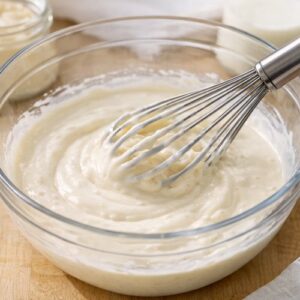
- In a large mixing bowl, combine your mayonnaise, whole milk, and buttermilk. Whisk these three ingredients together until completely smooth and homogeneous—there shouldn't be any streaks or separation. This creamy base is what coats every piece of cabbage, so this step matters more than it might seem. The combination of these three dairy products creates a texture that's luxurious without being heavy, which is the hallmark of truly excellent coleslaw. Take your time here; about one minute of whisking is perfect.
Step 3: Add the Seasonings and Acid
- To your creamy base, add the granulated sugar, fresh lemon juice, apple cider vinegar, salt, and lemon zest. Whisk thoroughly until the sugar completely dissolves—you should see no grains of sugar remaining. Taste a tiny spoonful of the dressing at this point. It should taste noticeably sweet and tangy—almost too much so if you were eating it on its own. This is exactly right. Remember, you're about to add eight cups of mild cabbage, which will dilute these flavors. The dressing needs to be assertive now so it's perfectly balanced when combined with all that vegetable.

Step 4: Combine Vegetables and Dressing
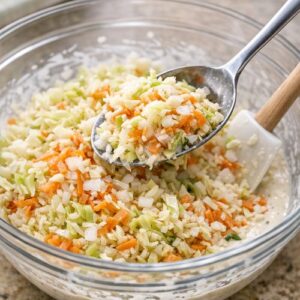
- Add your minced cabbage, carrot, and onion to the dressing bowl. Using a large spoon or rubber spatula, fold and toss the vegetables until every piece is coated with dressing. This isn't a gentle toss—really work it, lifting from the bottom and folding over the top, rotating the bowl as you go. Spend a good two to three minutes on this step. You want to ensure that the salt in the dressing makes initial contact with all the cabbage, which will begin drawing out the cabbage's natural moisture. If any vegetables look dry, keep mixing. When you're done, every piece of cabbage should glisten with dressing, and there should be a small amount of liquid pooling at the bottom of the bowl.
Step 5: Refrigerate Overnight (or at Least 4 Hours)
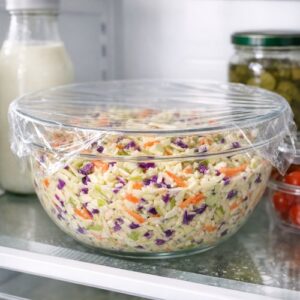
- Cover your bowl and place it in the refrigerator. Ideally, let it sit overnight—this is when the transformation happens. As time passes, the salt draws moisture from the cabbage, which then gets reabsorbed along with all the dressing flavors. The vegetables soften to the perfect tender-crisp texture, and what seemed like separate components—creamy, sweet, tangy—all merge into one harmonious flavor. If you only have a few hours, set a phone reminder and give it a stir halfway through. This occasional stirring helps distribute flavors and ensures even absorption. By the time you serve it, the coleslaw will have thickened slightly, which is exactly what you want.
Step 6: Taste, Adjust, and Serve
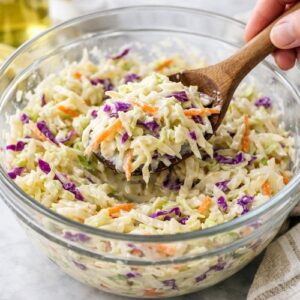
- About an hour before serving, remove the coleslaw from the refrigerator. Give it a good stir, bringing up any dressing that's pooled at the bottom and mixing it back into the vegetables. Now taste it and adjust as needed. Does it need more salt? Add a pinch. Does it need more tang? A squeeze of lemon juice. Does it taste too sweet? A splash of vinegar will balance it. Everyone's preferences are different, so this is your chance to make it perfect for your palate. Once you're happy with the flavor, let it come up to cool room temperature for about 30 minutes before serving. Cold coleslaw is fine, but cool-to-room-temperature coleslaw actually tastes better—the flavors are more vibrant.
Notes
- Chopping vegetables too large - If your cabbage pieces are bigger than rice grains, they won't absorb dressing evenly and the texture will be too crunchy. Use a food processor or sharp knife to mince everything fine. You can always add a little crunch back with a handful of toasted seeds or nuts if you want texture variety, but starting with small pieces is non-negotiable.
- Using bottled lemon juice instead of fresh - Bottled juice tastes metallic and flat compared to fresh-squeezed. Since lemon juice is a key flavor component here, this matters. Squeeze it fresh right before mixing. One lemon yields about 3 tablespoons of juice.
- Skipping the overnight refrigeration - I understand the temptation to eat it right away, but coleslaw served immediately is watery and tastes like separate components rather than a cohesive dish. Even four hours in the fridge makes a huge difference, but overnight is genuinely best. The wait is worth it.
- Using low-fat or fat-free mayo - This creates a thin, sad dressing that tastes more like vinegar and sugar. Splurge on quality full-fat mayo. Your coleslaw will thank you, and the portion sizes are small enough that it's a reasonable choice nutritionally.